
Late updated: 19 Dec 2025 14:12
Written by: Ella Thompson
Exploring Eco-Friendly Habits for Enhanced Mental Wellbeing
Exploring eco-friendly habits for mental well-being improvement offers an intriguing perspective on how our lifestyle choices impact our psychological health. The modern world presents countless challenges that can overwhelm our peace of mind, and adopting sustainable practices can serve as both a remedy and a form of prevention. By integrating sustainable living into our daily routines, we promote a healthier mental state and foster a greater sense of purpose and community.

In today’s fast-paced environment, it’s essential to find practical ways to maintain our mental health. Engaging in activities like urban gardening, practicing mindfulness, and reducing plastic usage not only helps the planet but also provides a sense of fulfilment and connection. As we become more conscious of our choices, we discover that these eco-friendly habits have tangible benefits for our mental wellbeing.
Exploring the psychological impact of sustainable living sheds light on how individual actions contribute to broader social and environmental outcomes. Our engagement in these practices encourages community involvement and strengthens social bonds, which are fundamental elements in maintaining emotional health. This exploration invites us to ignite a journey towards improved mental well-being through conscious eco-friendly habits.
Key Takeaways
- Eco-friendly habits enhance mental wellness by promoting purpose and connection.
- Sustainable practices improve emotional health through community and fulfilment.
- Conscious living choices provide both environmental and psychological benefits.
Core Eco-Friendly Habits for Enhancing Mental Wellbeing
In our exploration of eco-friendly habits, we focus on specific practices that significantly improve mental well-being. These practices involve engaging with nature, incorporating eco-friendly physical exercises, and maintaining sustainable routines that promote mindfulness.
Engaging With Nature and Outdoor Activities
Spending time in nature is a powerful way to boost our mental health. Activities such as hiking, forest bathing, or "shinrin-yoku" offer an immersive natural experience that can lower stress hormones like cortisol. Green spaces, whether in the form of forests or parks, act as a sanctuary for reducing anxiety and improving emotional health. Even simple outdoor activities like walking or cycling in these environments promote mental calmness and resilience.
Community gardens also present a unique opportunity for connecting with nature while fostering a sense of community and purpose. By participating in these shared spaces, we not only engage in physical activity but also gain the mental benefits of social interaction and environmental stewardship. Such nature-based interventions have been shown to significantly enhance emotional well-being, combat depression, and elevate our mood.
Eco-Conscious Physical Exercise and Green Spaces
Physical activities with an eco-friendly twist can greatly influence our mental health positively. Green exercise refers to physical activities performed in natural settings. By integrating nature into our fitness routines, such as jogging or biking in local parks, we enhance physical health and experience improvements in mental wellness. These activities are known to boost endorphins, elevate mood, and reduce symptoms of stress.
Urban gardening is another excellent way to incorporate eco-conscious exercise into our daily lives. It encourages engagement with the environment and promotes mindfulness. Furthermore, participating in activities like yoga or tai chi in green spaces can provide both the serenity of nature and the physical benefits of exercise. Through these practices, we build a harmonious connection with nature, elevating our overall sense of well-being.
Practising Mindfulness and Sustainable Routines
Incorporating mindfulness with sustainable living has substantial benefits for mental health. Mindfulness encourages us to focus on the present moment and appreciate our surroundings. Sustainable routines, such as reducing consumerism and waste, simplify our lives, providing mental clarity and peace. Activities like meditation in a natural setting or practising yoga with an emphasis on eco-consciousness integrate well-being with environmental responsibility.
Gardening is another mindful activity, offering a tactile and rewarding way to connect with nature. Planting and nurturing can significantly reduce stress levels and enhance our mood. The simple act of reducing plastic use or being mindful of our ecological footprint allows us to live with greater purpose and satisfaction, fostering a deeper sense of mental balance. Through these grounded habits, we move towards enhanced mental health, cultivating resilience and joy.
Sustainable Living Practices and Positive Psychology for Well-Being

Incorporating sustainable living practices has a powerful impact on mental well-being, enhancing self-esteem and fostering community connectedness. By adopting a sustainable lifestyle, we can focus on positive psychology principles that promote emotional stability and personal growth.
Minimalism, Decluttering, and Waste Reduction
Adapting minimalism invites us to intentional simplicity by decluttering our spaces, reducing unnecessary possessions, and making deliberate life choices. Implementing minimalistic habits can reduce stress and increase our sense of purpose, allowing us to focus on what truly matters. By letting go of items that no longer serve us, we make room for experiences that enhance psychological well-being.
Waste reduction plays a crucial role. Recycling, composting, and mindful consumption help lessen our environmental impact. By reducing food waste and opting for reusable containers, we actively contribute to sustainability. These actions not only reduce our carbon footprint but also inspire reflection and gratitude for the resources we have.
Community Engagement and Environmental Stewardship
Participating in community efforts fosters a sense of belonging, purpose, and optimism. By planting trees, tending to community gardens, or taking part in local clean-up activities, we foster connections and improve our local environment. This engagement strengthens community ties and builds emotional resilience.
Environmental stewardship extends beyond local action. Supporting eco-friendly initiatives and advocating for policy changes help combat climate change. By joining forces with like-minded individuals, we create a powerful collective impact, fostering personal growth and a deep sense of achievement.
Mindful Consumption and Sustainable Choices
Mindful consumption encourages us to make conscientious decisions, prioritising quality over quantity. Opting for sustainable fashion, embracing slow fashion principles, and reducing reliance on fast fashion contribute to reducing waste and supporting ethical production.
When it comes to food, choosing local produce and planning meals minimise environmental impact. Integrating public transportation into our routines or car-sharing reduces our carbon footprint. Adopting renewable energy sources further aligns our actions with sustainability goals.
By choosing eco-friendly practices, we enhance our psychological well-being, cultivate gratitude, and experience comfort knowing our choices support sustainable living. Ultimately, these practices contribute to a balanced lifestyle, enriching our emotional and mental health.
Frequently Asked Questions
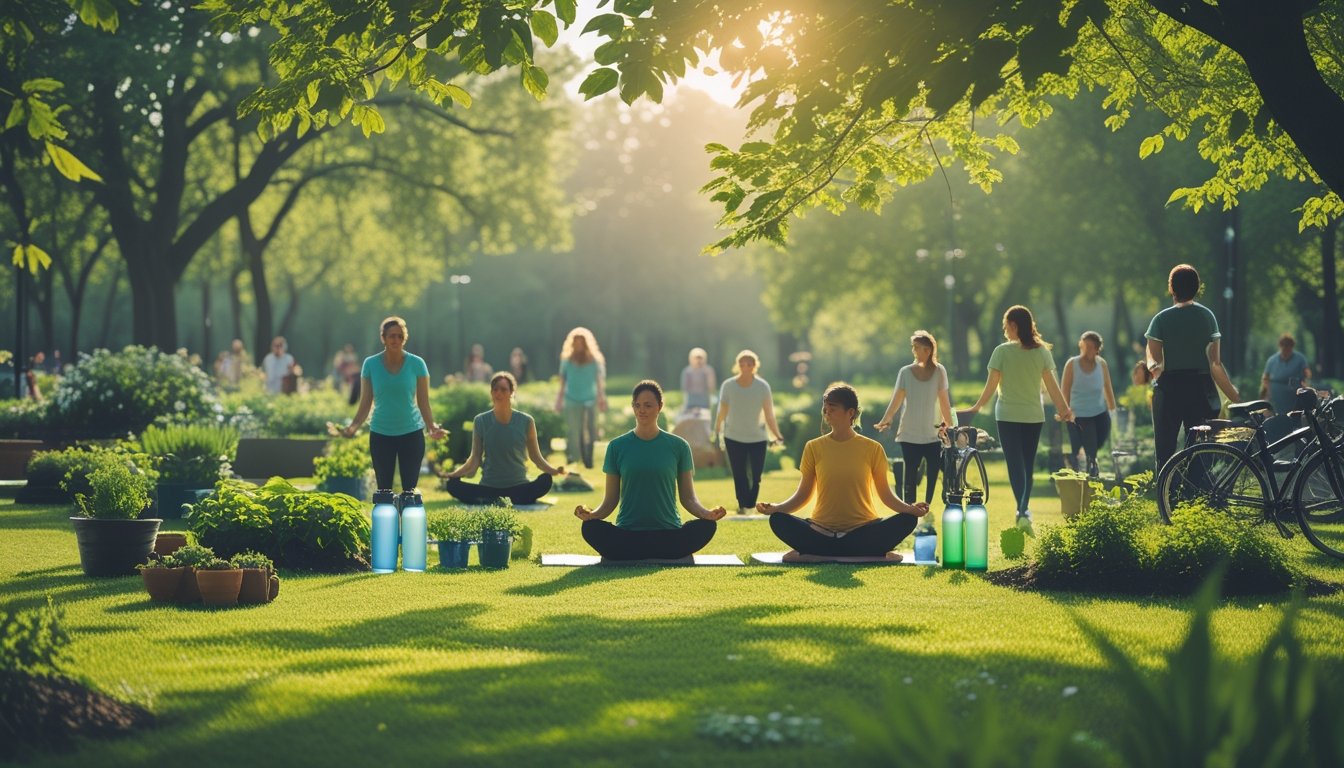
Incorporating green habits into our lives not only supports environmental health but also enhances mental well-being. From engaging with nature to practising mindful consumption, these eco-friendly strategies foster a healthier mind and body.
How can engaging with nature contribute to reducing stress levels?
Engaging with nature allows us to escape the hustle of urban life and connect with the tranquillity of the natural world. Spending time outdoors, such as in parks or gardens, reduces cortisol levels, which are associated with stress. The calming effects of nature can lead to improved mood and relaxation.
What are effective strategies for incorporating sustainability into daily routines to enhance psychological health?
Integrating sustainability into our routines can be both rewarding and fulfilling. Simple actions like using reusable bags, recycling, and conserving energy teach mindfulness and responsibility. These practices encourage a conscious lifestyle that promotes mental peace and a connection to our environment.
Could you outline the mental health benefits of adopting a plant-based diet?
Adopting a plant-based diet offers numerous benefits beyond physical health. It can enhance mental clarity and boost mood due to increased intake of vitamins and antioxidants. This dietary choice also instils a sense of purpose and aligns with environmental stewardship, which can be mentally uplifting.
In what ways does reducing one's carbon footprint have a positive impact on personal wellbeing?
Reducing our carbon footprint can lead to a gratifying sense of achievement. By cutting back on energy consumption and prioritising sustainable travel, we not only benefit the planet but also feel more in control and fulfilled. This boosts our mental state as we contribute positively to the world.
How does participating in community environmental efforts provide enrichment to one's mental state?
Community environmental efforts foster a sense of belonging and purpose. Engaging with like-minded individuals in activities like tree planting or clean-ups strengthens social connections. These activities offer satisfaction and communal support, crucial components in enhancing mental well-being.
Can you suggest methods for mindfully managing waste that also result in improved mental clarity?
Mindful waste management can be both practical and refreshing. Adopting habits like composting and reducing single-use items minimises clutter and promotes environmental responsibility. This approach can clear mental space by fostering orderliness and mindfulness, both vital to mental clarity.